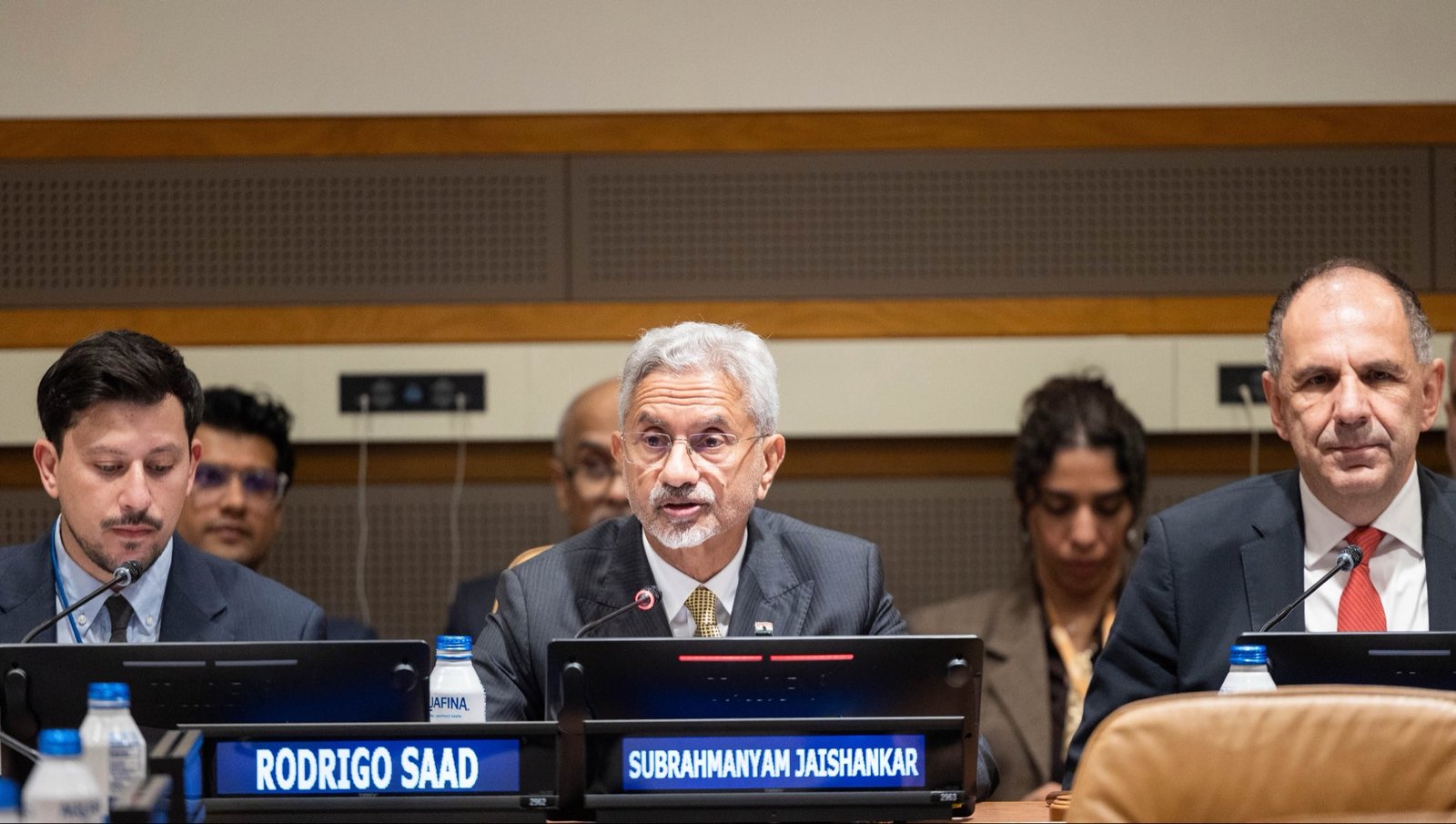
External Affairs Minister S. Jaishankar highlights India’s continuing contribution to UN peacekeeping, humanitarian assistance and crisis response, while stressing that lasting peace requires stability, security and predictability.
External Affairs Minister S. Jaishankar warns against attempts to normalise terrorism, highlights India’s peacekeeping and development assistance, and calls for stronger multilateral institutions and greater representation of the Global South.
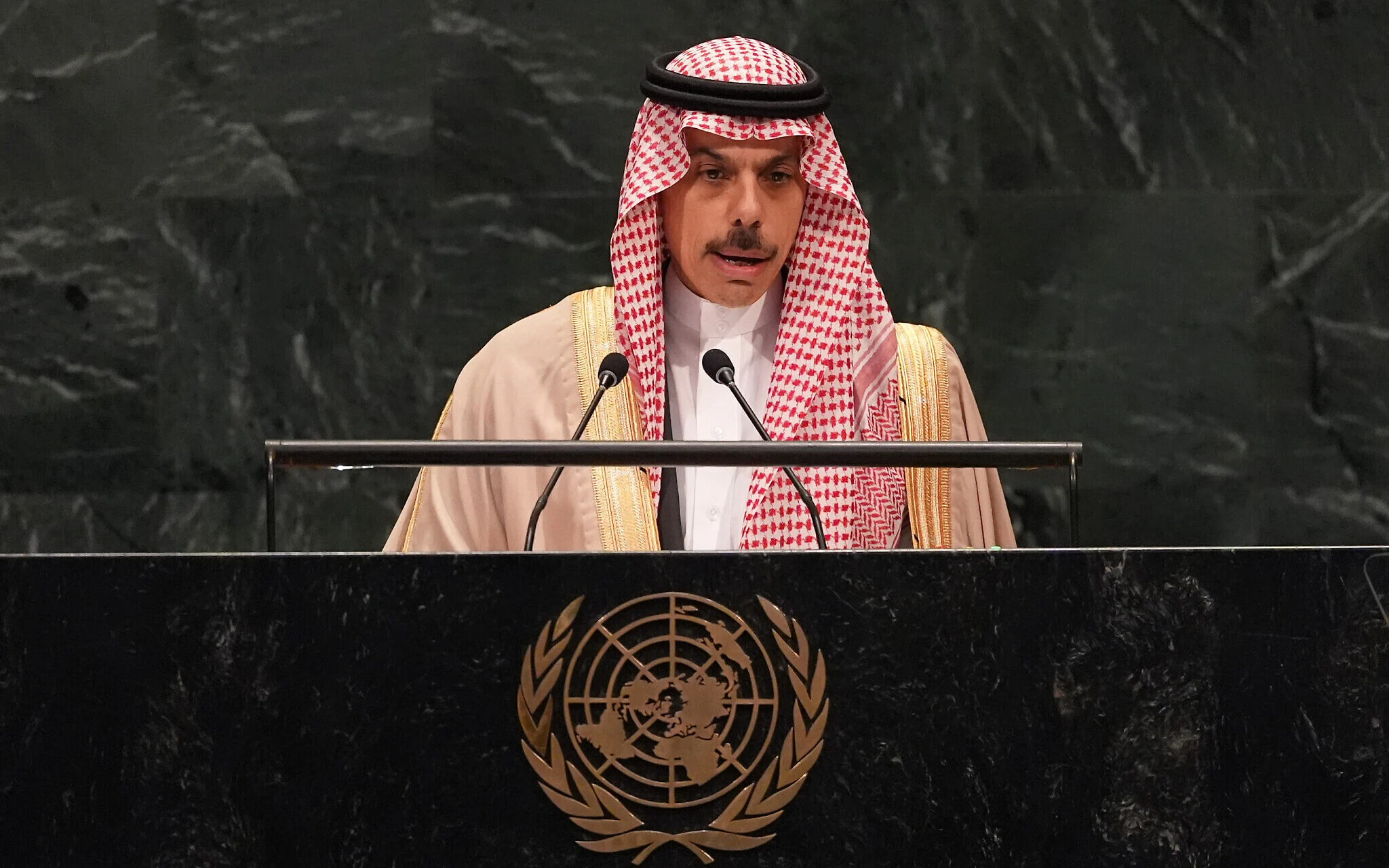
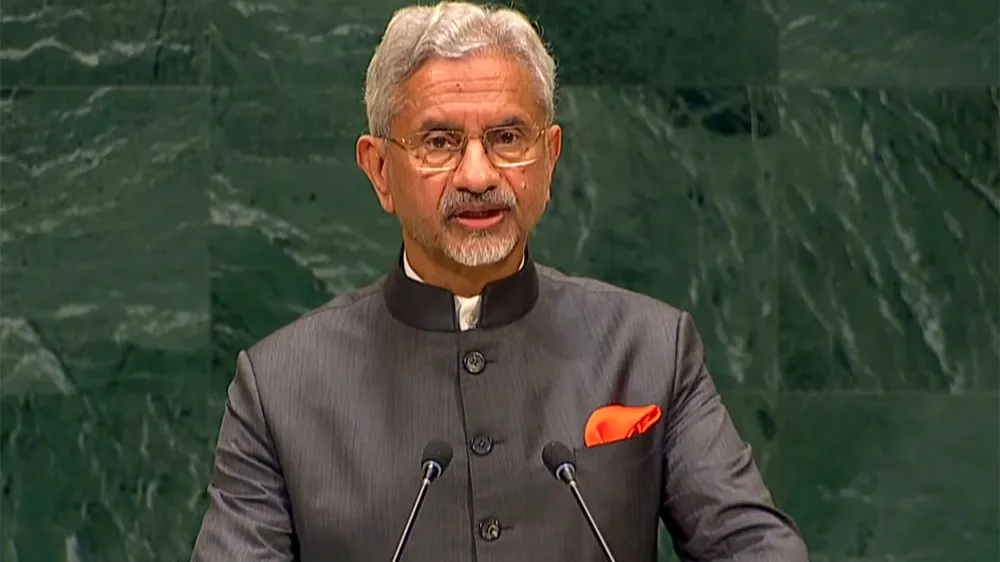
United Nations, Sept 2026 : External Affairs Minister S. Jaishankar on Saturday said India would exercise its right to defend itself against terrorism, delivering a strong message at the UN General Assembly and accusing an unnamed country of misrepresenting facts before the international community.
“Yesterday, a serial practitioner of terrorism misrepresented facts before this assembly,” Jaishankar said during the General Debate. “Our right to defend ourselves against terrorism will be exercised.”
The minister did not name the country in the remarks. He said attempts were being made to normalise terrorism and argue that those responsible should be immune from its consequences. “That will not stand,” he said, calling for continued international efforts against terrorism.
Jaishankar described state-sponsored terrorism with a cross-border dimension as a challenge to the international order. He said governments involved in such activities must be held accountable and stressed the need to expose and disrupt terrorist financing.
“Friendship and goodwill cannot coexist with terrorism,” he said, calling for a sustained policy of zero tolerance towards terrorism.
India’s broader counter-terrorism position includes international cooperation against terrorist financing and cross-border networks. The government has also outlined a national counter-terrorism framework, PRAHAAR, which focuses on prevention, rapid response, inter-agency coordination, rule-of-law-based processes and international cooperation.
Warning Over Global Economic Pressures
Moving beyond security concerns, Jaishankar said the international system was facing a wider crisis marked by what he described as the “weaponisation of everything”, including finance, market access, supply chains and technology.
He said countries were responding by reducing vulnerabilities and diversifying their economic and strategic relationships, but warned that trust and goodwill were being weakened.
For developing countries, he identified what he termed a “4F crisis” involving food, fuel, fertiliser and finance. He pointed to risks arising from extreme weather conditions, fertiliser shortages and disruptions to the movement of food grains.
Jaishankar also raised concerns about non-market practices and restricted market access, arguing that such barriers could affect the ability of developing countries to industrialise and expand their economies.
He presented India’s own development experience as an example of how technology and public infrastructure could be used to widen access to services. He said India’s digital public infrastructure had generated social and economic benefits and that New Delhi was sharing its experience with partner countries.
Development Partnerships and Humanitarian Assistance
Jaishankar said India had undertaken around 600 major development projects across 78 countries, covering areas including infrastructure, manufacturing, agriculture, information technology and capacity building.
He said African countries and small island developing states had been among India’s preferred partners, while development cooperation remained an important component of New Delhi’s international engagement.
The minister also highlighted India’s humanitarian assistance during conflicts, epidemics and natural disasters. He referred to the country’s response to flash floods in Nepal and an earthquake in Venezuela, as well as assistance involving medicines, food, energy and fertilisers.
“Given the state of the world, each member of the UN must ask themselves what they can do,” Jaishankar said, linking India’s development projects, humanitarian assistance and peacekeeping deployments to its wider contribution to international cooperation.
India’s UN Peacekeeping Role
Jaishankar also highlighted India’s contribution to UN peacekeeping. He said Indian contingents were currently serving under nine of the UN’s 11 peacekeeping mandates and had performed their duties professionally, including in difficult circumstances.
He also referred to an Indian woman combat helicopter pilot who received the UN’s 2025 Military Gender Advocate of the Year award. Major Abhilasha Barak received the honour for her service with the UN Interim Force in Lebanon, where she served as an Engagement Team Commander and Gender Focal Point. The UN recognised her efforts to promote gender-responsive peacekeeping and outreach to women and girls in conflict-affected communities.
Jaishankar said peace should not be defined merely as the absence of war. Stability, security and predictability were also essential for sustaining peace, he argued.
Call for Maritime Security and AI Cooperation
Turning to maritime security, Jaishankar condemned attacks on commercial vessels and seafarers in international waterways, including areas stretching from the Gulf and Red Sea towards the Black Sea. He noted that Indian seafarers had also lost their lives in such incidents.
On artificial intelligence, he said countries should have the ability to develop their own AI models and deployment strategies according to national priorities. India, he said, would make AI an important component of its partnerships with countries of the Global South.
Push for Multilateral Reform
Jaishankar also renewed India’s call for reform of international institutions as the global order becomes increasingly multipolar. He argued that large sections of humanity should not remain excluded from decision-making processes.
“The case for reformed multilateralism only gets stronger day after day,” he said.
India has consistently sought reform of the UN Security Council, including permanent membership for itself, arguing that the Council’s current structure does not adequately reflect contemporary geopolitical and economic realities.
Jaishankar concluded by invoking Mahatma Gandhi: “There is no way to peace. Peace is the way.” His address brought together India’s positions on terrorism, peacekeeping, development cooperation, maritime security, emerging technology and reform of global institutions.