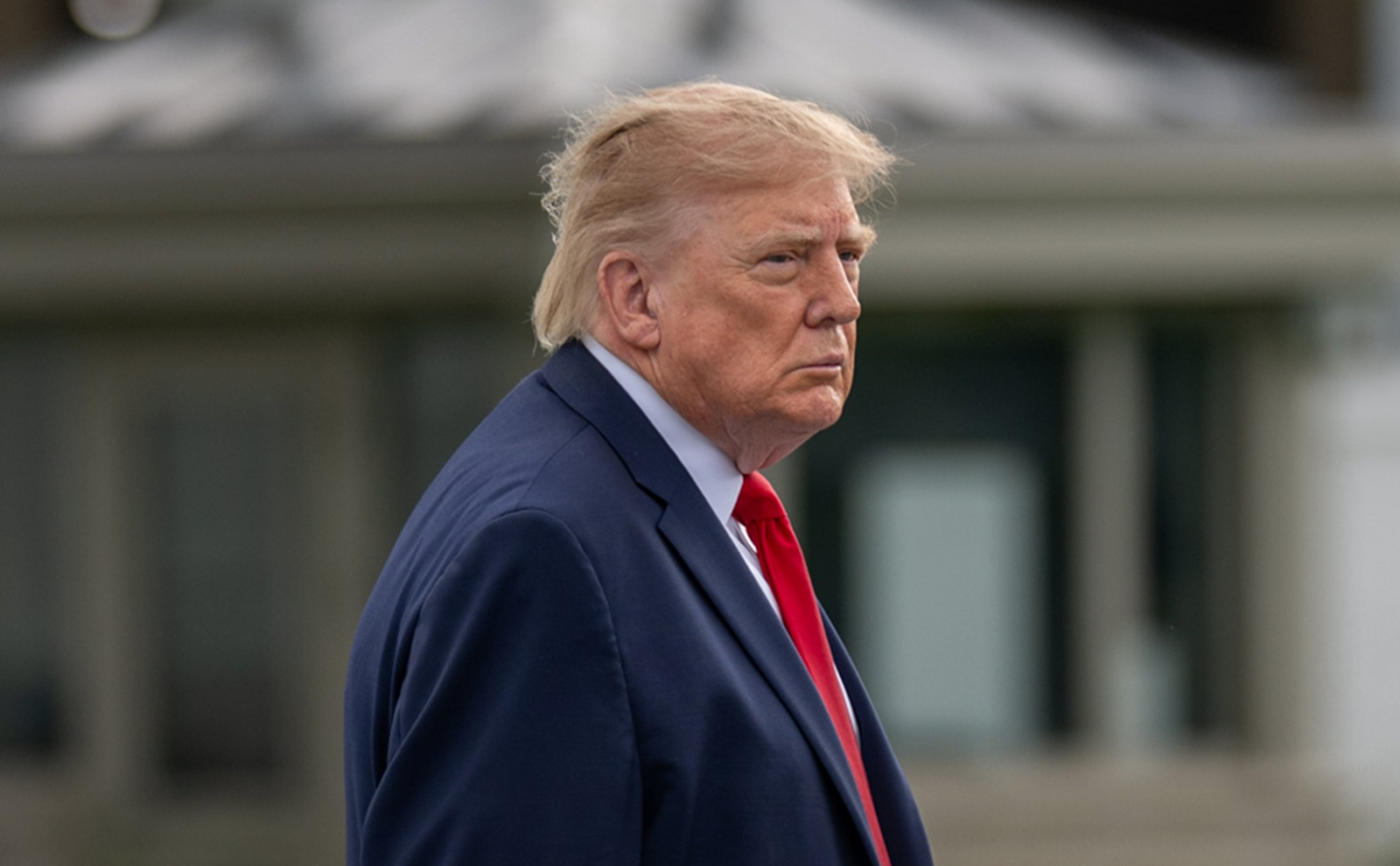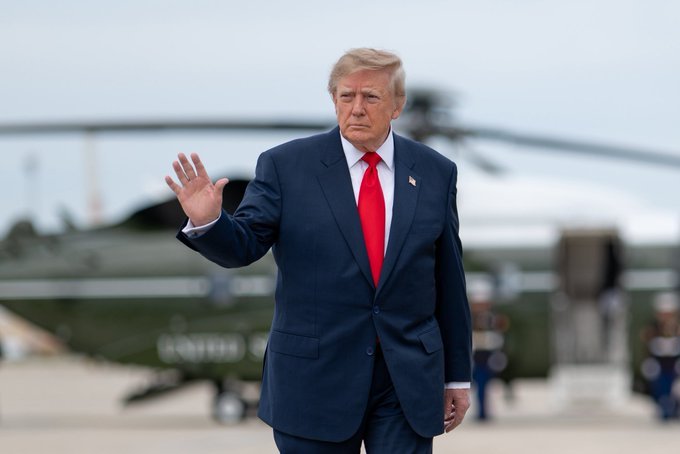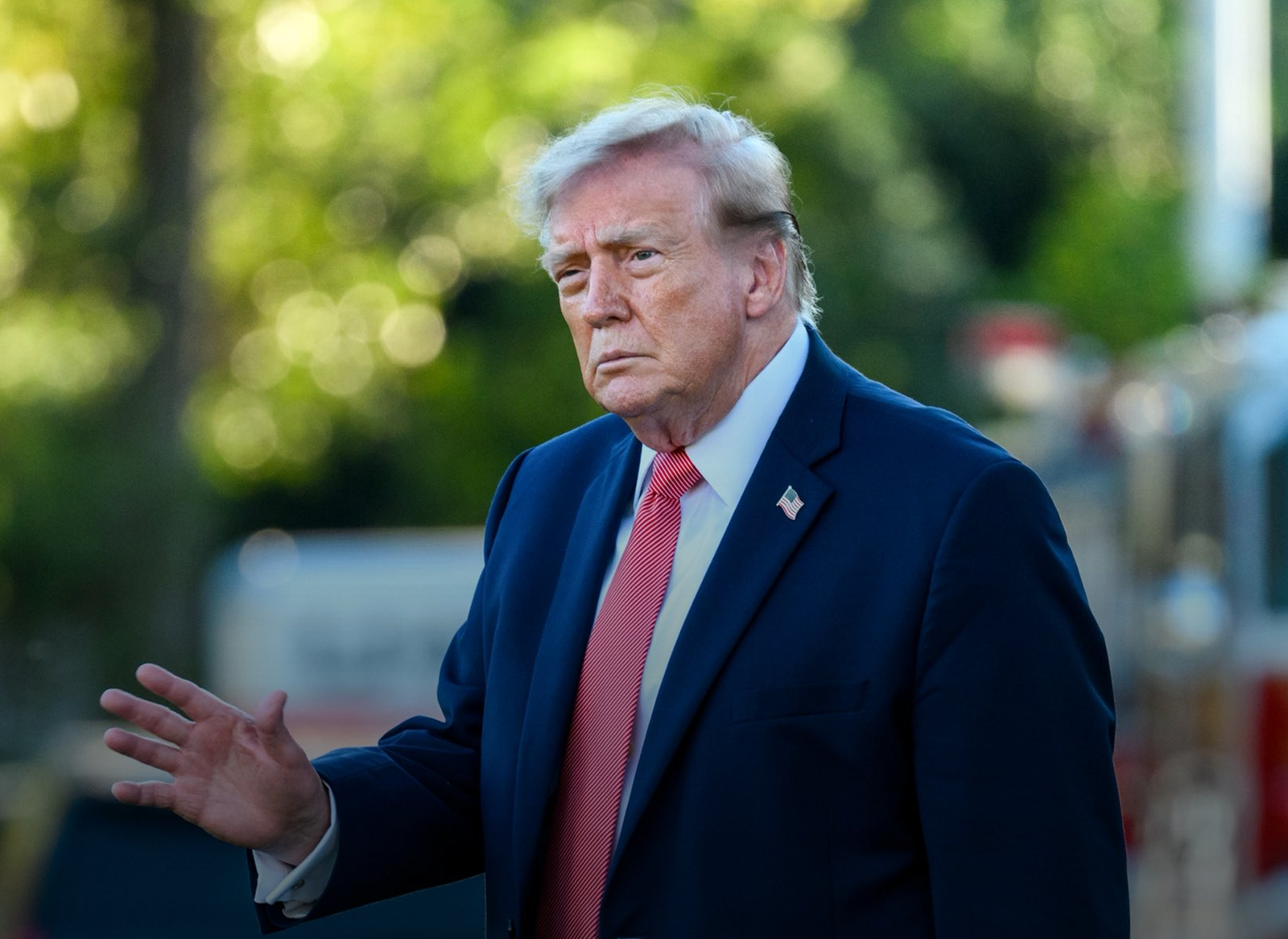
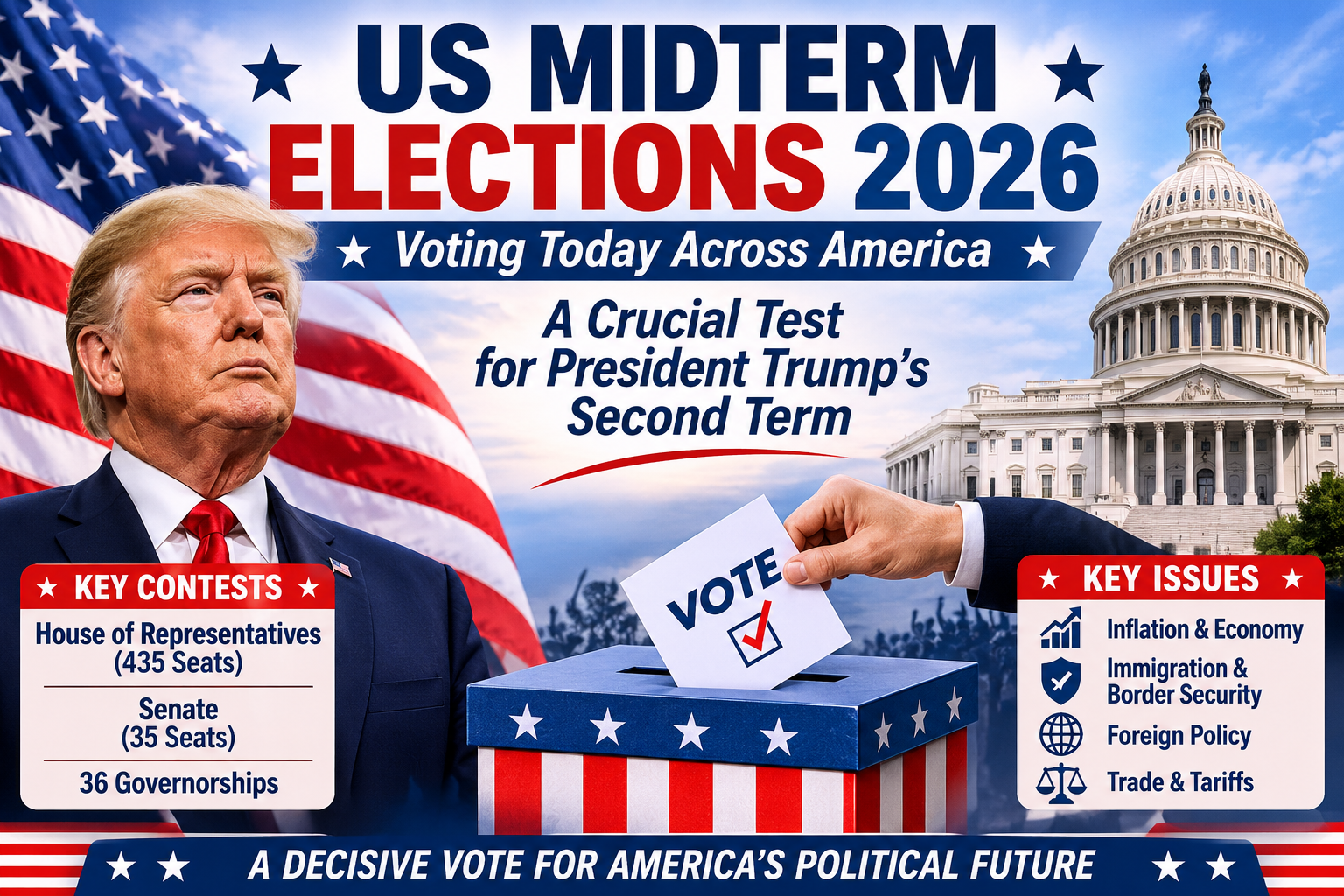
Washington, November 2026 : Voting began across the United States on Tuesday, November 3, for the 2026 midterm elections, a crucial political contest being closely watched around the world. Taking place midway through President Donald Trump’s second term, the elections will determine the balance of power in both chambers of the US Congress and could significantly influence the direction of his administration over the next two years.
Republicans and Democrats are engaged in a closely fought battle for control of the House of Representatives and the Senate. Pre-election surveys have indicated an advantage for the Democratic Party, particularly in the race for the House, while the contest for the Senate remains more uncertain.
Polling stations are opening across different states according to their respective local schedules, with millions of Americans expected to cast their votes. The elections are widely being viewed as a public assessment of Trump's policies and the performance of his administration during the first two years of his second presidential term.
A total of 435 seats in the House of Representatives and 35 seats in the Senate are being contested. In addition, voters in 36 states are electing their governors. The outcome could reshape the political landscape in Washington and determine how much legislative support the President can expect during the remainder of his term.
Democrats eye control of the House
Several pre-election surveys have pointed towards a stronger position for the Democratic Party in the House of Representatives. According to an election forecast by CBS News, Democrats could secure approximately 229 seats. However, this remains a projection, and the actual outcome will become clear only after voting and counting are completed.
Republicans currently hold a narrow majority in the House, leaving Democrats with an opportunity to regain control if they can win a relatively small number of additional seats. Political analysts believe that a Democratic victory could make it considerably more difficult for the Trump administration to push through key legislative proposals.
Control of the House is particularly important because it plays a central role in approving legislation, overseeing federal spending and scrutinising the functioning of the administration. A shift in the balance of power could also lead to more frequent congressional investigations and greater scrutiny of government decisions.
For the Republicans, retaining their narrow majority would be important in ensuring that the President's legislative agenda continues to receive support in Congress.
Senate contest remains unpredictable
The battle for the Senate is considered more complicated. Republicans currently hold 53 seats, while the Democratic camp has 47. To secure a majority, Democrats would need a net gain of at least four seats, while also defending their existing positions.
Although some election models have suggested that Democrats could potentially gain control of the Senate, analysts remain divided over the possibility. Several experts believe Republicans still have a strong chance of retaining their majority.
The results in states such as Texas, Michigan, Alaska, Kansas, Maine, North Carolina and Ohio are expected to play a significant role in determining the final Senate balance.
Texas is among the closely watched contests, with Democratic candidate James Talarico facing Republican candidate Ken Paxton. The Senate races in Michigan and Kansas are also being considered important in determining which party controls the chamber.
The outcome of these contests could have implications beyond the composition of the Senate. The chamber plays a major role in confirming presidential appointments, including senior government officials and federal judges. A change in its political control could therefore affect the administration's ability to secure approval for important nominations.
Inflation, immigration and trade dominate campaign
Economic concerns have emerged as some of the most important issues in the election campaign. Inflation, employment, immigration, trade tariffs and foreign policy have featured prominently in the political debate.
The rising cost of everyday goods and the increasing cost of living have been major concerns among American voters. Democrats have sought to use these issues to challenge the economic record of the Republican administration, arguing that household financial pressures remain a significant problem.
Republicans, meanwhile, have focused on economic growth, border security and national interests. The party has defended the administration's approach to the economy and immigration, presenting these issues as central to its political agenda.
Trump's economic policies have generated differing responses among voters, making the election an important test of public confidence in his administration.
Immigration and border management have also remained key campaign themes, with Republicans emphasising stricter border security while Democrats have sought to highlight concerns over the administration's approach.
Foreign policy has added another dimension to the campaign, as voters assess the administration's handling of America's international relationships and strategic priorities.
Early voting crosses 57 million
A significant feature of the 2026 midterm elections has been the high participation in early voting. According to figures from the University of Florida's Election Lab, more than 57 million Americans had already cast their ballots before Election Day.
The figure is higher than the early-voting participation recorded during the 2022 midterm elections, indicating considerable public engagement with this year's contest.
Political analysts believe the strong early-voting numbers reflect growing interest in the elections. However, they caution that early-voting figures alone cannot determine which party is likely to win.
The final outcome will also depend on voter turnout on Election Day, particularly the ability of both parties to mobilise their supporters and bring them to polling stations.
The timing and pattern of voting across states could also influence how quickly results become available. Since the US operates across multiple time zones, polling stations will close at different times. Initial results are expected to emerge after voting ends, although closely contested races may take longer to produce a definitive outcome.
What the results could mean for Trump
US midterm elections are held halfway through a President's four-year term. Voters do not elect a President during these elections but choose members of Congress, effectively expressing their views on the administration's performance and policy direction.
If Democrats gain control of either the House or the Senate, the political environment for Trump could change substantially. An opposition-controlled chamber could intensify scrutiny of government policies and make it more difficult for the administration to secure approval for legislation, budgets and government spending proposals.
A divided Congress could also lead to political deadlocks over important legislative measures and presidential appointments. This could slow the administration's policy agenda during the final two years of Trump's term.
On the other hand, if Republicans manage to retain control of both chambers, it would be viewed as a significant political victory for the President. It would allow the administration to continue working with a supportive Congress and provide greater scope to advance its legislative priorities.
The results will therefore be closely examined not only for their impact on individual candidates and states but also for what they indicate about the political standing of the President.
Global implications of the midterms
The importance of the 2026 midterm elections extends beyond domestic American politics. The composition of Congress can influence decisions relating to foreign policy, international trade, defence spending and diplomatic engagement.
A change in congressional control could affect the level of support for the administration's international initiatives and shape debates over America's economic and strategic relationships with other countries.
For governments and markets around the world, the election results will offer important indications of the political constraints and opportunities facing the Trump administration during the remainder of its term.
As voting continues across the country, the key question remains whether Democrats can translate their pre-election advantage into victories and regain control of Congress, or whether Republicans will manage to retain their narrow majorities.
The outcome will determine the political balance in Washington and could set the tone for the final two years of Trump's second presidency.
(Disclaimer :The content of this article is sourced from a news agency and has not been edited by the Mavericknews30 team.)