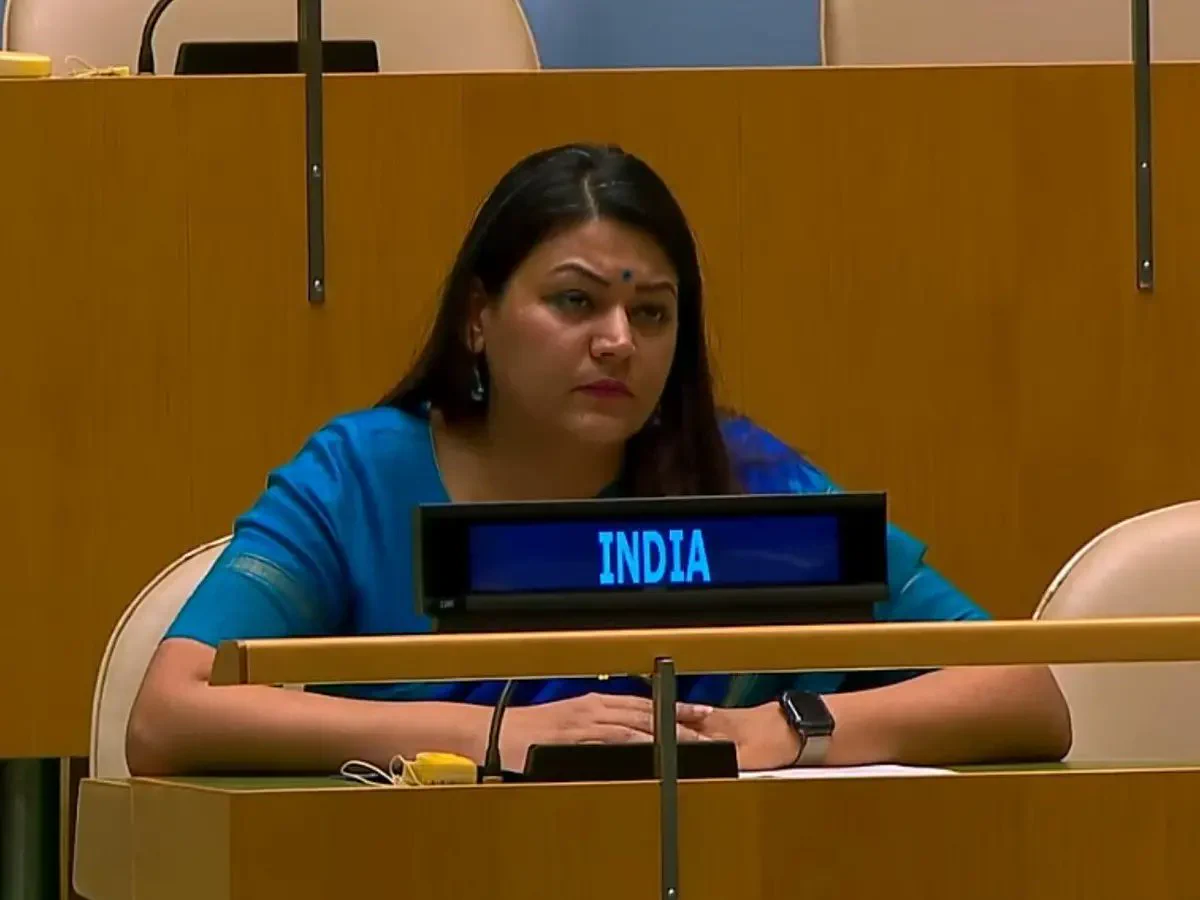
India exercised its right of reply at the UN General Assembly after Pakistan Prime Minister Shehbaz Sharif raised Kashmir and the Indus waters issue in his address. First Secretary Petal Gahlot rejected Pakistan’s allegations, cited Islamabad’s record on terrorism and minorities, and warned that continued cross-border terrorism would have consequences.
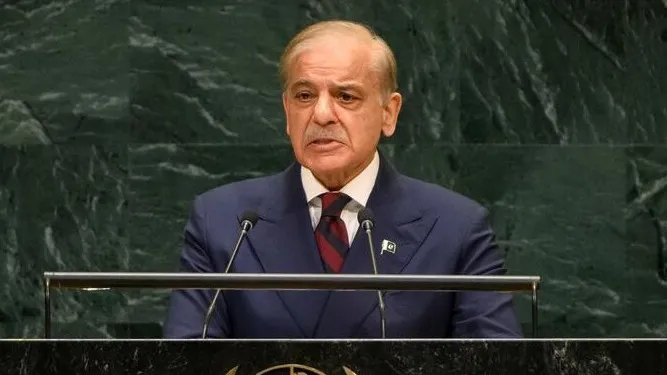
United Nations, Sept 2026 : India on Friday strongly rejected Pakistan Prime Minister Shehbaz Sharif’s remarks at the UN General Assembly, accusing Islamabad of using the global forum to repeat what New Delhi described as false narratives on Jammu and Kashmir, terrorism and India-Pakistan relations.
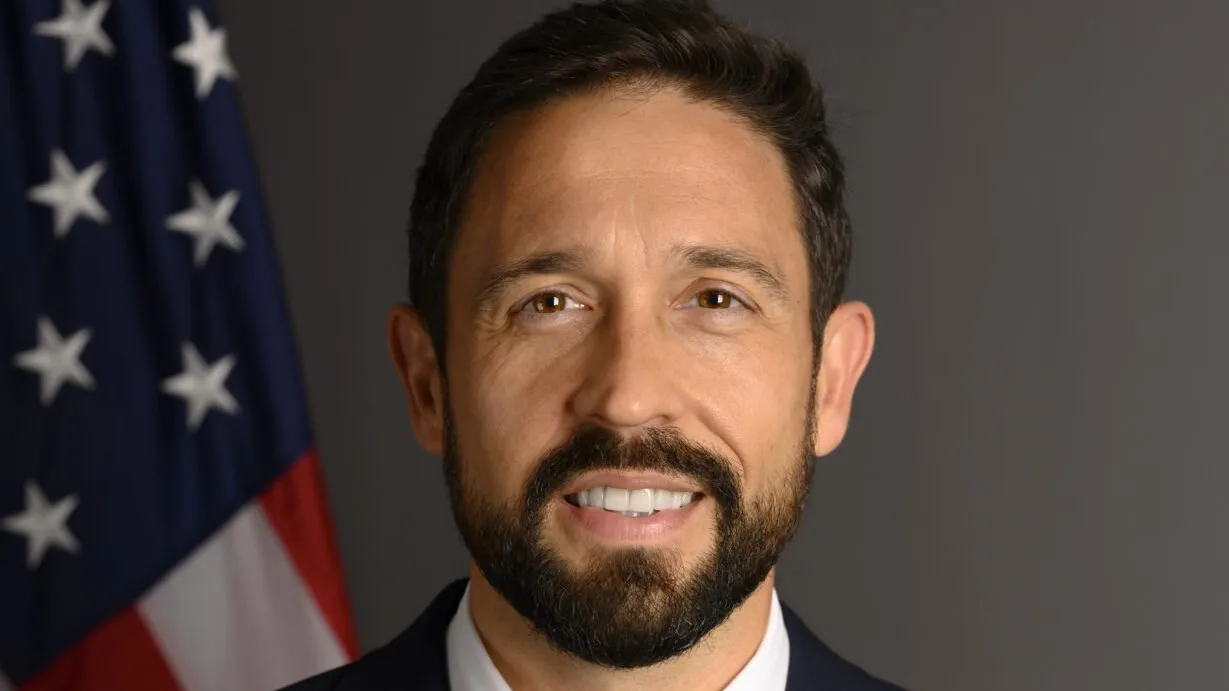
Exercising India’s right of reply, Petal Gahlot, First Secretary at India’s Permanent Mission to the United Nations, criticised Sharif’s speech and questioned Pakistan’s record on democracy, terrorism and religious minorities. Her response came after Sharif raised Kashmir and the Indus waters issue during his address to the 81st session of the General Assembly.
Gahlot said Pakistan’s political system continued to be heavily influenced by its military establishment and referred to Sharif’s repeated praise for Pakistan’s military leadership. She alleged that elected governments in Pakistan had limited authority, arguing that the country’s military continued to wield significant political influence.
She also invoked the case of Osama bin Laden, the mastermind of the September 11, 2001, terrorist attacks in the United States. Gahlot noted that bin Laden was found and killed by US forces in Abbottabad in 2011, near Pakistan’s military academy.
Her reference to the episode was intended to challenge Pakistan’s criticism of India on terrorism and to highlight what New Delhi has described as Islamabad’s longstanding failure to prevent terrorist groups from operating from its territory.
Gahlot also criticised Sharif’s praise for Field Marshal Syed Asim Munir, Pakistan’s military chief, during his UN address. She questioned what she described as the prominence given to the military leadership in Pakistan’s political affairs.
Turning to Pakistan’s record on democracy and human rights, Gahlot said Islamabad could not credibly lecture others on democratic values while facing criticism over its treatment of political opponents and protesters.
She also rejected Sharif’s remarks concerning religious intolerance in India, pointing instead to concerns over Pakistan’s blasphemy laws and the treatment of religious minorities. Gahlot argued that reports concerning minorities in Pakistan needed to be considered when discussing religious freedom and tolerance.
The Indian diplomat then turned to Jammu and Kashmir, reiterating New Delhi’s longstanding position that the Union Territory is an integral and inalienable part of India.
“If we must talk about Kashmir,” Gahlot said, according to reports of her remarks, attention should also be directed towards Pakistan-occupied Jammu and Kashmir. She referred to allegations of violence, killings and restrictions on basic rights in the region.
Her comments came after Sharif, in his UN speech, called for a “just and fair solution” to the Kashmir dispute and said generations of Kashmiris had been waiting for the United Nations to fulfil what Pakistan considers its commitment to self-determination. Pakistan’s government has continued to press this position at international forums.
Gahlot also addressed the issue of terrorism and referred to India’s military response following the April 2025 Pahalgam terror attack. India has blamed Pakistan-based terrorists for the attack, while Islamabad has rejected accusations of involvement.
Referring to India’s response, she said New Delhi had demonstrated that terrorists would have “nowhere to run, nowhere to hide”. She warned that India’s right to defend itself against terrorism would continue to be exercised.
“Continued terrorism by Pakistan will have consequences,” Gahlot said, adding that persistent terrorist activity could affect areas of India-Pakistan engagement that had previously been based on friendship and goodwill.
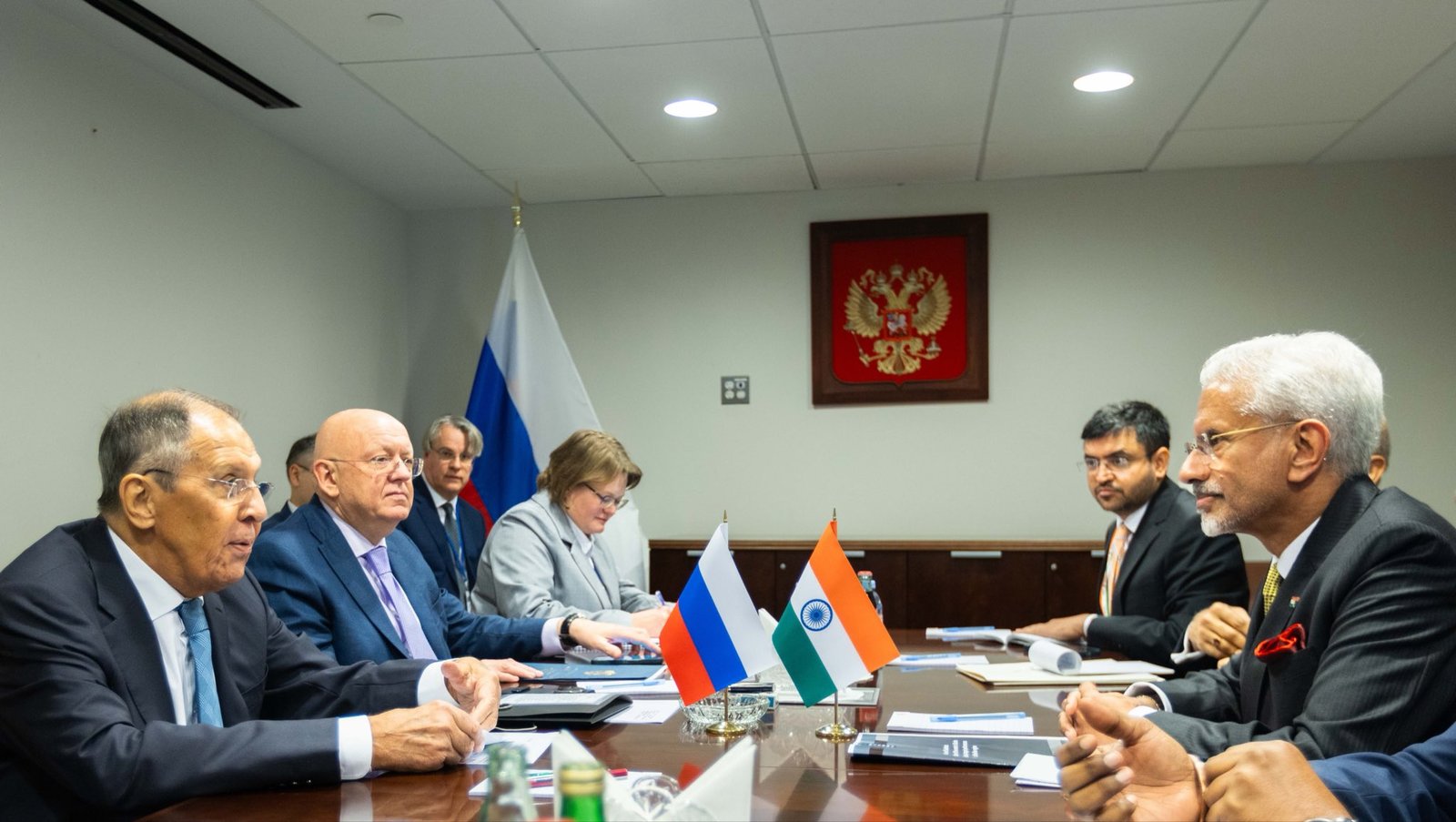
Her response also came amid a wider exchange between Indian and Pakistani representatives at the UN. External Affairs Minister S. Jaishankar separately responded sharply to a Pakistani journalist who questioned India over terrorism, saying, “A terrorist country is asking me that question,” before India’s Permanent Representative to the UN, Harish Parvathaneni, told the journalist that the response had been clear.
Gahlot concluded by calling on the international community to assess Pakistan’s policies on the basis of its actions rather than its statements at international forums.
She said repeated assertions did not turn contested claims into facts and argued that Pakistan’s approach to terrorism and regional issues had implications beyond its bilateral relationship with India.
The exchange underscored the continuing diplomatic tensions between the two South Asian neighbours at the UN, with Kashmir, terrorism and water-sharing remaining among the principal points of disagreement. Sharif had separately warned that any attempt by India to stop, impede or divert Pakistan’s share of Indus waters would be treated as an “act of war”, while India maintains that the Indus Waters Treaty was placed in abeyance following the Pahalgam attack.
(Disclaimer :The content of this article is sourced from a news agency and has not been edited by the Mavericknews30 team.)