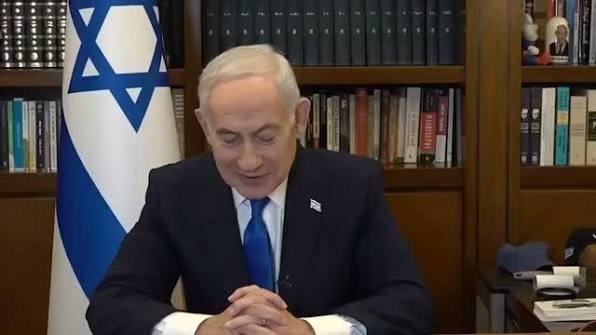
JERUSALEM, Oct 2026 : Israeli Prime Minister Benjamin Netanyahu emerged as the leader of the largest political bloc as votes were counted following the country’s latest election on Tuesday, but the absence of a parliamentary majority has left his path to another term dependent on coalition negotiations with rival political forces.
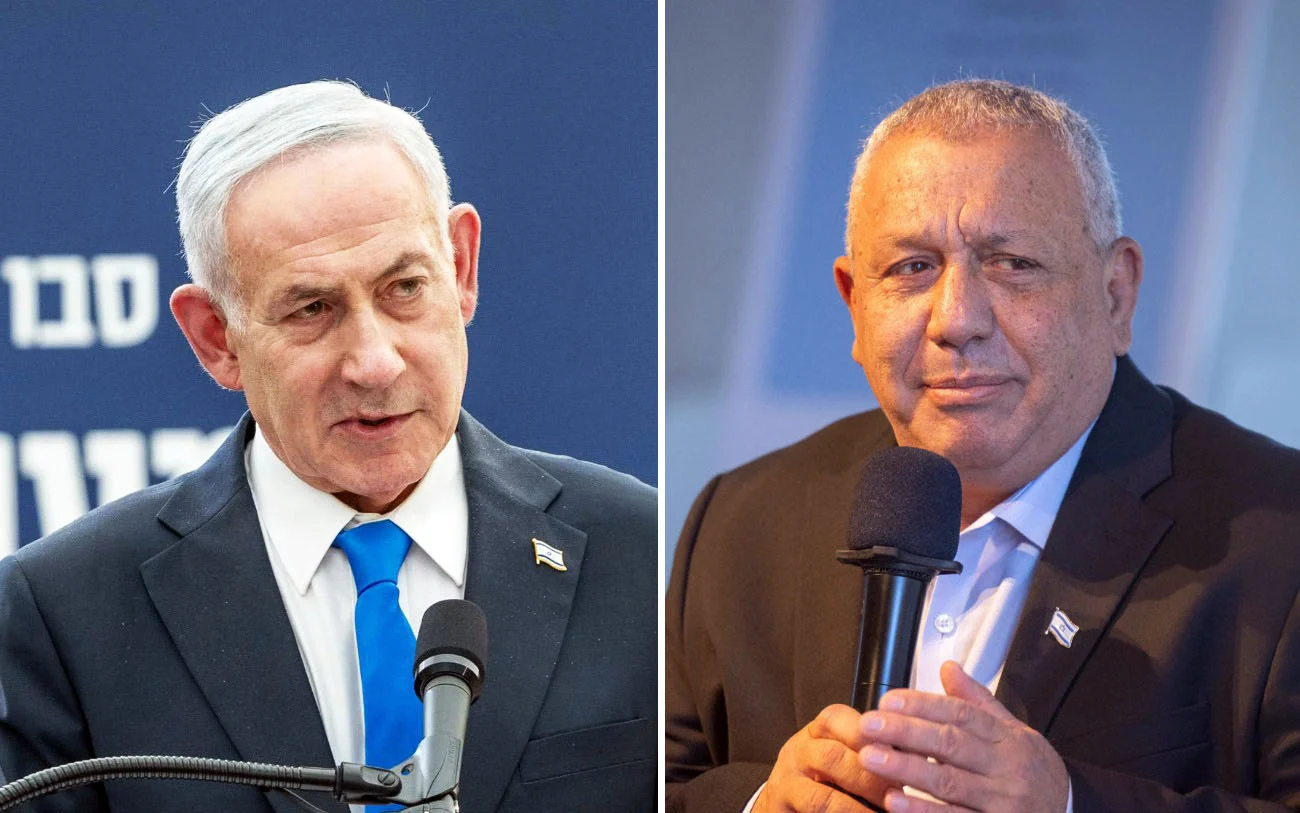
With nearly 86 per cent of votes counted and voter turnout reaching a record high, Israel’s three main broadcasters projected Netanyahu’s bloc of right-wing, far-right and ultra-Orthodox parties to secure 53 seats in the 120-member Knesset. The opposition bloc led by rival Gadi Eisenkot was projected to win 48 seats, while parties representing Arab Israelis were on course to secure 19 seats.
Neither of the two main blocs appeared close to the 61 seats required to form a majority government, setting the stage for potentially difficult negotiations and raising the possibility of a broad unity government or another election.
Former Netanyahu adviser Aviv Bushinsky described the prime minister’s performance as a political comeback, despite the absence of a clear parliamentary majority.
“Maybe it’s hard to say it or to see it, but he’s the winner,” Bushinsky said, characterising Netanyahu’s political recovery as a “resurrection”.
Analyst Danny Citrinowicz, a former Israeli military intelligence officer, offered a more cautious assessment, arguing that Netanyahu’s principal achievement was surviving a challenging election rather than securing an outright victory.
The result comes amid continuing criticism of Netanyahu’s leadership following the October 7, 2023, Hamas attacks on Israel, which exposed major security failures. Nevertheless, he has retained substantial support among Israeli Jewish voters and emerged at the head of the largest parliamentary bloc.
Arab Israeli Voters Emerge as Potential Kingmakers
One of the most significant developments in the Israeli election was the strong turnout among Arab Israeli voters, whose support could prove decisive in determining the composition of the next government.
Arab Israelis, who account for approximately 21 per cent of Israel’s population, could hold the balance of power between the rival political blocs. Their parliamentary representation may become particularly important if neither side can secure sufficient support from other parties.
“The Arabs have never been in a position where they held this much power,” said Dennis Ross, a former US Middle East peace negotiator.
However, forming an alternative government without Netanyahu could prove difficult for Eisenkot and his allies. Any attempt to assemble a parliamentary majority may require direct or indirect backing from Arab parties, a prospect that could complicate negotiations with potential right-wing partners, including Naftali Bennett and Avigdor Lieberman.
Political analysts see two broad possibilities: a wider national unity government under Netanyahu or a prolonged political stalemate that could eventually lead to fresh elections.
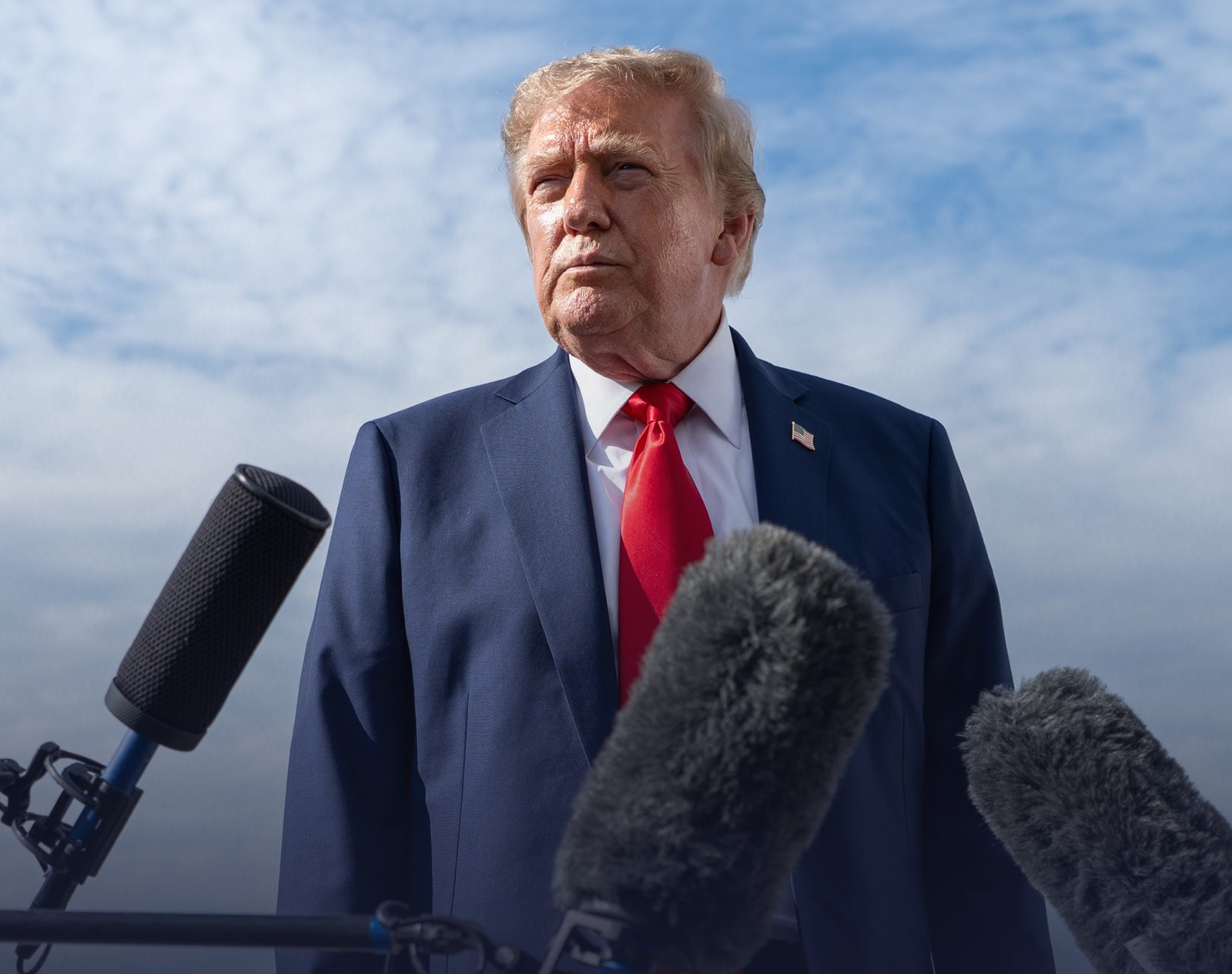
Bushinsky considers a unity government the more plausible option, particularly if US President Donald Trump encourages Netanyahu to bring opposition figures into the government and reduce the influence of far-right ministers Itamar Ben-Gvir and Bezalel Smotrich.
As Israel’s most important international ally, the United States could exert considerable diplomatic influence during coalition negotiations. Trump’s public support for Netanyahu may provide him with leverage to encourage a broader political arrangement.
Iran and Regional Security Dominate Political Debate
Iran and Israel’s regional security challenges are expected to remain central to the formation of the next government.
Since the October 7 attacks, Israel has fought wars against Hamas in Gaza and Hezbollah in Lebanon and launched joint attacks with the United States against Iran.
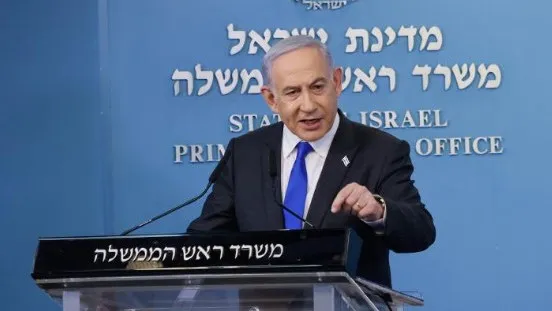
Addressing cheering supporters after the election, Netanyahu called for a “strong right-wing national government” and presented Israel’s military operations as an opportunity to address what he described as the Iranian threat.
“Israel faces a singular historical opportunity, together with our partner President Trump, to remove the existential threat of Iran once and for all,” he said, adding that other considerations should not distract from that objective.
Trump, who had urged Israeli voters to keep Netanyahu in power so the two leaders could “finish the job” in Iran, said the prime minister had performed “very well”. He also credited his endorsement with contributing to Netanyahu’s electoral performance.
The unresolved parliamentary arithmetic, however, leaves questions about how effectively the next government can pursue its domestic and foreign policy priorities. Any renewed confrontation with Tehran would also depend significantly on Washington’s position.
Eisenkot Challenges Netanyahu’s Leadership
Eisenkot, 66, sought to frame the election as a referendum on Netanyahu’s leadership. He has also faced personal losses during the Gaza war, including the deaths of a son and two nephews.
In a message directed at Israel’s security chiefs and public servants, Eisenkot said Netanyahu would lead a transitional government that had lost public confidence. He urged officials to remain firm against any attempt to challenge them.
Netanyahu entered the election facing several domestic controversies, including his long-running corruption trial, opposition to an independent inquiry into the October 7 security failures, escalating settler violence in the occupied West Bank and disputes over military service exemptions for ultra-Orthodox Jews.
With neither major bloc projected to command a majority, coalition negotiations will determine whether Netanyahu can secure another term or whether Israel faces renewed political uncertainty. For now, his position at the head of the largest bloc gives him an advantage in the government-formation process, but the final outcome remains dependent on the support he can assemble in the Knesset.
(Disclaimer :The content of this article is sourced from a news agency and has not been edited by the Mavericknews30 team.)